
Written by: Victor Nwaolise
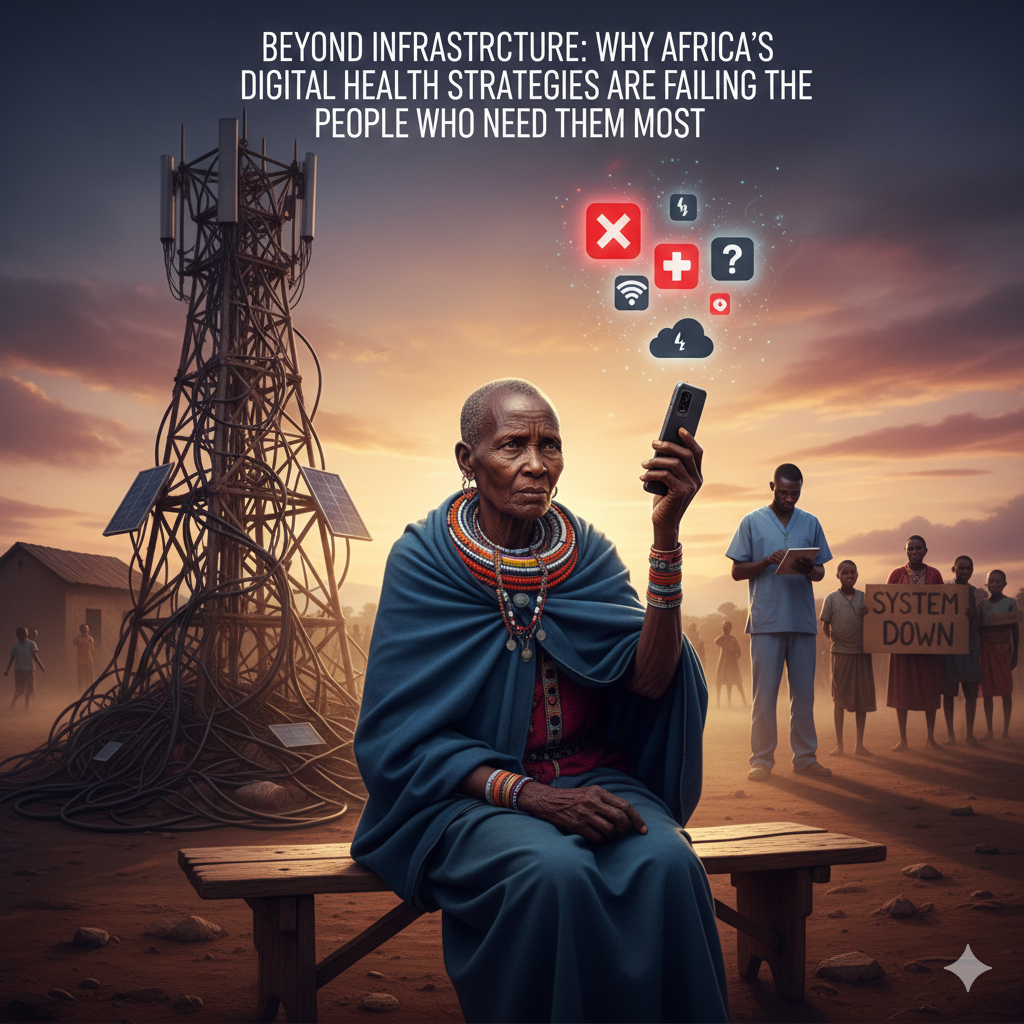
The promise is everywhere: Nigeria’s Digital in Health Initiative, The African Union’s Digital Transformation Strategy, WHO’s vision for AI-powered diagnostics and cloud-connected health records across Africa. Policymakers see a transformed future for healthcare delivery on the continent.
But this month, as I analyzed digital health strategies from global to national levels, I noticed something troubling. Our most carefully crafted strategies are designed for an Africa that doesn’t exist yet.
The disconnect
While strategies champion interoperability standards and broadband connectivity targets, reality tells a different story. Most rural health facilities have no stable electricity. Most Nigerians lack reliable internet. Health insurance coverage remains minimal. These aren’t small problems to fix later. They are fundamental assumptions in our frameworks that make solutions inaccessible to the people who need them most.
Three critical gaps
My team found three gaps running through every strategy level.
First, infrastructure constraints. The WHO assumes digital maturity already exists. The AU’s broadband targets won’t arrive for years. Current needs go unaddressed in this dangerous vacuum.
Second, the digital divide. Strategies talk beautifully about “inclusiveness” and “people-centered care.” Then they require smartphones, internet connectivity, and digital literacy that most Africans don’t have.
Third, trust and governance. Western-trained AI models carry algorithmic bias. Healthcare workers resist new systems. Regulatory frameworks remain unclear. Our strategies barely touch these human and institutional barriers.
We’re doing it backwards
What struck me wasn’t just finding these gaps. It was realizing they show a deeper problem: we’re approaching digital health transformation backwards.
Current strategies say: “Build infrastructure first, then deploy solutions.” This sounds logical until you remember that building comprehensive digital infrastructure will take over a decade. Meanwhile, diabetes and hypertension are killing people today.
The real question isn’t whether Africa can build digital health infrastructure. It’s whether we can innovate solutions that work during the gap period, not after it closes.
Learning from what’s already deployed
I looked at AI tools already working in Africa. Babyl Rwanda’s AI triage system. EyeArt’s diabetic retinopathy screening in South Africa. They offer valuable lessons but also reveal hard truths. Even successful commercial AI needed substantial investment, government partnerships, specialized equipment, and reliable connectivity. These prerequisites create their own barriers to scale.
But then, what if?
What if we designed AI tools that work offline first? Tools that connect to cloud infrastructure when available, not because they require it. Tools that run on basic tablets, not specialized equipment. Tools that work through Community Health Workers instead of depending on scarce physicians and pharmacists.
This isn’t just a technical challenge. It’s a strategic shift that questions the assumptions in our frameworks.
The paradigm shift
The future of digital health in Africa won’t be decided by whether we can copy Western infrastructure. It will be shaped by our willingness to innovate for Africa as it exists now, not as we wish it to be.
That’s the paradigm shift our strategies need. And that’s the challenge this fellowship is preparing us to address.