
Written By OLUWATOSIN MOBOLAJI
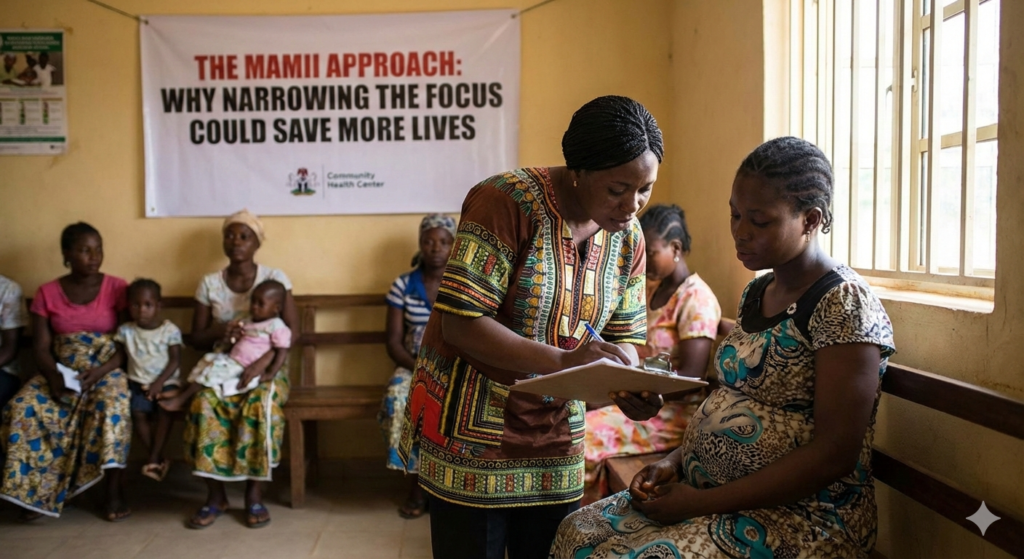
For a long time now, maternal mortality in Nigeria has been a huge worry, not just for us here at home, but for the rest of the world as well. Over the years, many efforts have gone into reducing the number of women who lose their lives during pregnancy or childbirth. Yet, if we’re being honest, progress has been slower than we all hoped.
We’ve tried several large, globally driven ideas, including initiatives like the Safe Motherhood Initiative. These programs were built on good intentions and important principles. However, many of them didn’t quite move the needle in Nigeria. In hindsight, this isn’t entirely surprising. Nigeria has a unique mix of social, geographic, and systemic challenges, and strategies designed for the global stage don’t always fit neatly into our local reality.
Recognizing this gap, Nigeria began developing home-grown approaches to address the specific factors driving maternal deaths. Initiatives such as the Midwives Service Scheme were introduced to improve access to skilled birth attendants in rural communities, while the Basic Health Care Provision Fund aimed to reduce financial barriers to care for the poorest populations.
These were important steps forward, but they still faced significant limitations. Trying to do everything, everywhere, all at once proved difficult. With limited funding and an overstretched workforce, resources were spread too thin. In some cases, primary health centers were built without enough personnel to run them effectively, and as programs expanded nationwide, tracking performance and accountability became increasingly challenging.
MAMII: A Different Way of Thinking
In 2024, Nigeria launched the Maternal and Neonatal Mortality Reduction Innovation Initiative (MAMII). What stands out about MAMII isn’t just what it aims to do, but how it goes about it. It feels like a clear attempt to learn from the past.
Unlike earlier one-size-fits-all approaches, MAMII is deliberately focused. Rather than spreading resources across the entire country, it targets 172 local government areas with the highest burden of maternal mortality. By narrowing the scope, it becomes easier to track progress, strengthen accountability, and deploy health workers more strategically. It also makes funding needs more realistic, increasing the chances that the programme can be sustained over time.
Another important shift is MAMII’s recognition that the causes of maternal mortality are not the same everywhere.
Solving Problems Where They Actually Happen
In some communities, for example, health facilities and midwives were already present, yet maternal deaths remained high. The issue wasn’t the absence of skilled personnel, it was poor transportation. Women struggled to reach facilities on time, and drugs and medical supplies often arrived late. Applying the same national solution to such diverse problems predictably produced disappointing results.
MAMII’s decision to carry out field assessments in each selected local government area shows a more grounded understanding: local problems require local solutions. This approach makes the initiative feel more intentional and more closely connected to what is actually happening in communities.
Keeping an Eye on the Future
That said, even the most thoughtful initiatives require careful monitoring. The use of incentives to reward high-performing local governments is a smart strategy, but it also makes strong data surveillance essential. Without robust systems, there is always the risk of distorted reporting.
Similarly, MAMII’s reliance on digital reporting must be matched with regular reviews and strong policy support. Nigeria’s digital health space is still evolving, and continuous oversight will be necessary to identify gaps early and fix them. It would be unfortunate to discover, at the program’s final review in 2027, that data systems were not sustained throughout implementation.
At the end of the day, MAMII is more than just another maternal health program. It signals a shift toward learning from past mistakes, listening more closely to local realities, and responding with greater precision. Whether it ultimately achieves all its goals remains to be seen, but it is, without question, a meaningful step in the right direction.