
Written by: Ojo Onikepo
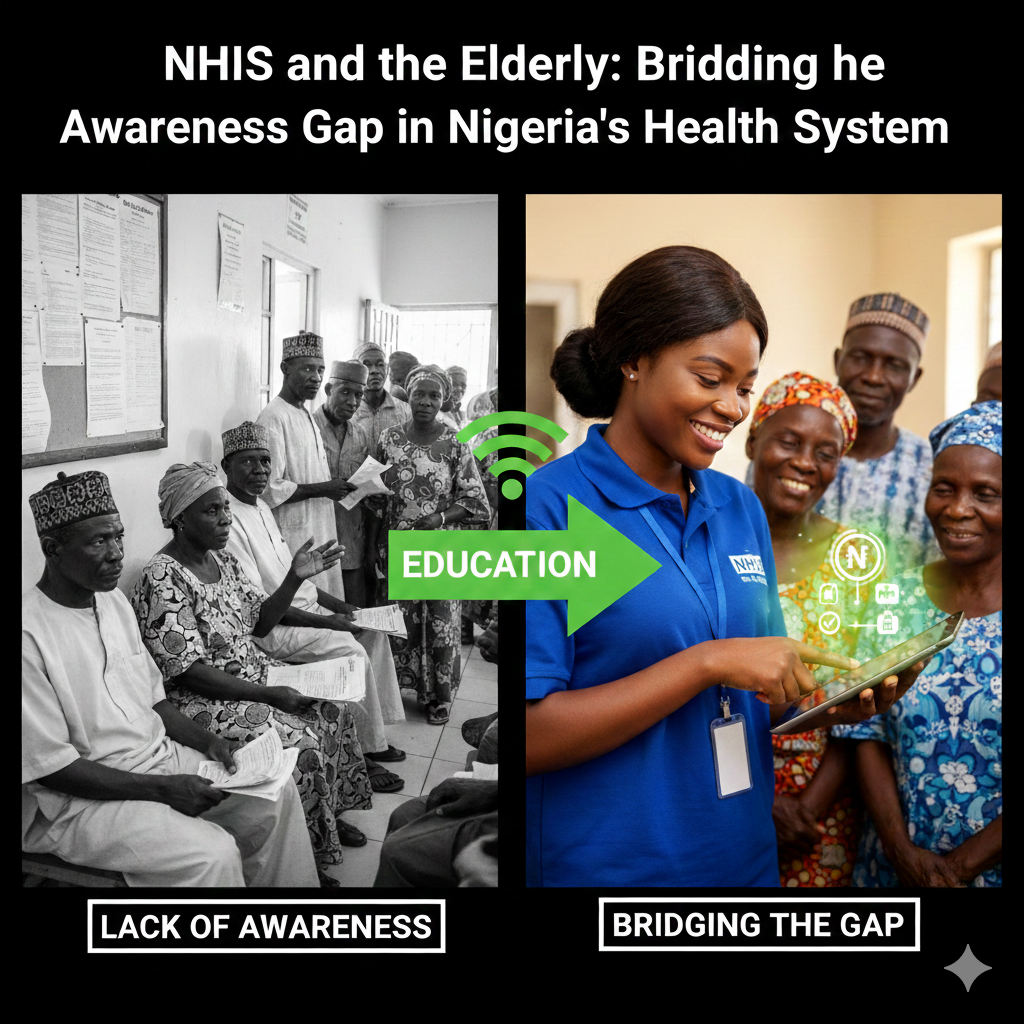
In a recent visit to a geriatric clinic assisting a colleague with data collection, I engaged multiple elderly patients in conversations about how they accessed and paid for their healthcare services. Many of them spoke candidly about depending on their children, relatives or personal savings to afford medications and investigations. When asked about the National Health Insurance Scheme (NHIS), a surprising number either had never heard of it or they believed it was meant exclusively for Civil and Public workers. This particular observation highlights a critical but often overlooked issue: despite the existence of NHIS, many elderly Nigerians remain excluded. And this is not based on the policy alone, but a lack of awareness by the general public.
Overview of NHIS in Nigeria
The National Health Insurance Scheme was established to promote access to affordable and quality health services while reducing the financial burden of healthcare on Nigerians. It’s major aim is to protect individuals and families from catastrophic out-of-pocket health expenditures through pooled funding and prepayment mechanisms. In principle, NHIS is designed to benefit all Nigerians, including vulnerable populations such as the elderly, retirees, workers, and those living with chronic illnesses. However, while policies exist in the books, it is in the aspect of implementation at the grassroots level in which the elderly that need it reside and seek care that remains inconsistent.
Observations from the Geriatrics Clinic
Geriatrics clinic provide care largely for older adults, many of whom live with chronic conditions such as hypertension, diabetes mellitus, arthritis, and cardiovascular diseases. These conditions often require lifelong medication and regular follow-up. Yet, many of the elderly patients encountered during data collection were still paying out of pocket for services that could potentially be covered under NHIS.
Some common responses included:
“I have heard of health insurance, but I don’t know how it works.”
“Isn’t NHIS for people still working?”
These responses point to a major gap, one not necessarily rooted in policy availability, but in health insurance literacy among the elderly population.
Benefits of NHIS for the Elderly
- Reduced Financial Burden – Elderly patients often live on a limited income or pensions. NHIS reduces out-of-pocket spending on consultations and medications.
- Improved Access to Medicines – Many chronic disease medications are included in the NHIS drug list, promoting better adherence and disease control.
- Regular Healthcare Utilization – Insurance coverage encourages elderly patients to seek care early rather than waiting until conditions worsen due to cost concerns.
- Continuity of Care – NHIS facilitates structured follow-up, which is critical for managing chronic illnesses common in old age.
- Reduced Burden on Family Caregivers – By sharing healthcare costs, NHIS lessens the financial and emotional strain on families supporting elderly relatives.
Challenges and Limitations of NHIS in Geriatric Care
- Poor Awareness – Many elderly individuals are unaware of NHIS or misunderstand their eligibility.
- Limited Coverage of Services and Medicines – Some essential drugs and specialized investigations required for geriatric care are not fully covered. Some patients complained of not getting prescribed medication so they’d rather get outside.
- Administrative Bottlenecks – Delays in authorization, out-of-stock, long waiting times, and complex processes can discourage the use of NHIS.
Awareness: The Missing Link
The experiences from the geriatric clinic suggest that awareness is one of the weakest links in NHIS implementation for the elderly. A health insurance scheme cannot fulfill its mandate if its intended beneficiaries do not understand its existence, or processes. For many elderly Nigerians, NHIS remains an abstract policy rather than a practical solution.
Health education efforts often target the working population, leaving retirees and informal-sector elders behind. Without deliberate inclusion, this vulnerable group continues to face preventable financial hardship.
Role of Healthcare Professionals
Healthcare professionals, especially pharmacists, nurses, and physicians as well as social workers are strategically positioned to bridge this gap. In geriatric clinics, routine patient interactions provide opportunities for brief NHIS education and counseling. Pharmacists, in particular can:
- Educate patients on NHIS-covered medications
- Clarify misconceptions about eligibility
- Guide patients on enrollment and renewal processes
- Such interventions can significantly improve utilization and outcomes.
Recommendations
- Community Awareness – Awareness campaigns should be conducted in local languages and in simple terms.
- NHIS Education at Point of Care – Geriatrics clinics should serve as hubs for NHIS information dissemination.
- Simplified Enrollment Processes – Registration and renewal procedures should be made elderly-friendly, with minimal bureaucracy.
- Expanded Coverage for Geriatric Needs – Review and inclusion of more chronic disease medications and investigations commonly required by older adults.
- Interprofessional Collaboration – Pharmacists, social workers, nurses, physicians and community health workers should collaborate to support elderly patients.
NHIS has the potential to significantly improve healthcare access and quality of life for elderly Nigerians. However, without adequate awareness, and elderly-centered implementation, this potential remains largely unrealized. The experiences from the geriatrics clinic underscore a pressing need to move beyond policy formulation to practical, inclusive execution.
Ensuring that elderly Nigerians understand and benefit from NHIS is not merely a health system obligation, it is a moral responsibility to a population that has contributed immensely to nation-building. Bridging this awareness gap could be one of the most impactful steps toward equitable healthcare in Nigeria.