
Written By: MIBEN REBECCAH SAMUEL
Growing up, I heard many stories about cholera and how it has claimed the lives of countless children, especially in Africa. I always believed cholera was simply a disease of poor sanitation—something that affected only the most marginalized communities and posed little threat to the wider population. Recently, however, I have come to understand that climate change also plays a significant role in cholera outbreaks.
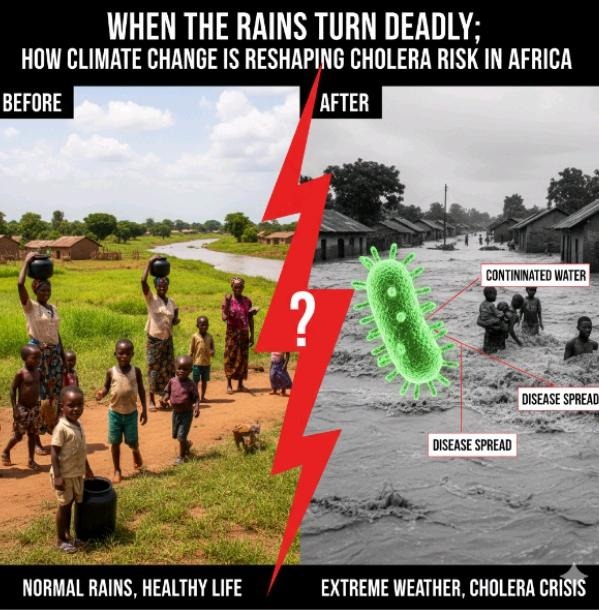
In many African countries, the arrival of rain is meant to bring relief from heat, drought, and hunger. Yet, increasingly, these rains are followed by something far more deadly: outbreaks of cholera. As global temperatures rise, rainfall patterns shift, and floods become more frequent, cholera is emerging as a climate-sensitive disease.
Climate change is altering the environmental conditions that allow Vibrio cholerae—the bacterium responsible for cholera—to thrive, spread, and kill. Cholera remains one of the most persistent public health threats in Africa. Between 2020 and 2024, Nigeria recorded 4,778 cholera-related deaths. From January 2022 to July 2024, there were 399,508 reported cholera cases across the African region. In 2024 alone, the World Health Organization (WHO) recorded over 560,000 cholera cases worldwide and 6,028 deaths.
What is most disturbing is not only the number of cases, but when and where they occur.
Outbreaks often peak during the rainy season, particularly after episodes of intense rainfall and flooding. Climate change increases rainfall variability and the frequency of extreme weather events, creating ideal conditions for cholera transmission. While climate change is not introducing cholera to new regions, it is amplifying its intensity and prolonging its seasonal window.
Rising temperatures accelerate the growth and survival of Vibrio cholerae in water bodies. Heavy rainfall and flooding overwhelm already fragile sanitation systems, washing human waste into rivers and wells and contaminating drinking water supplies. Flooding also forces communities to rely on unsafe water sources for survival. On the other hand, drought and water scarcity increase cholera risk by reducing access to clean water and encouraging unsafe water storage practices. Together, these climate factors transform environmental water sources into reservoirs for disease.
Africa remains particularly vulnerable because many communities—including mine—already face limited access to safe drinking water, inadequate sanitation, rapid urbanization, and fragile health systems. Climate change pushes these systems beyond their limits, turning preventable risks into deadly crises.
Cholera is both treatable and preventable. No one should die from it. Yet many children—the most vulnerable group—continue to lose their lives because climate risks are outpacing public health preparedness. We must be more proactive.
Cholera is no longer merely a marker of poverty; it is a warning signal of climate stress. When the rains turn deadly, inaction becomes a decision—one that costs lives.
Governments, policymakers, public health institutions, and climate leaders must treat cholera outbreaks as both a health emergency and a climate warning. Investments in water, sanitation, and hygiene must be prioritized alongside climate-resilient infrastructure. Early-warning systems that combine climate data with disease surveillance should be strengthened to prevent outbreaks before they begin.
At the community level, awareness, preparedness, and access to safe water can save lives. And at a global scale, reducing greenhouse gas emissions is no longer optional—it is a public health necessity.
The rains should bring life, not death. The time to act is now.