
Written By: Abereola Sarah Abidemi
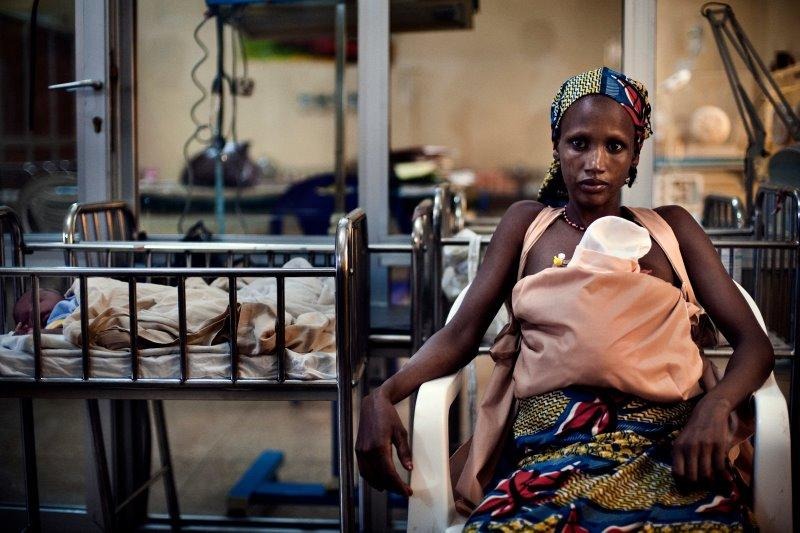
The most striking thing I heard during my final-year research was not about side effects or access. It was how quietly many women spoke about their husbands.
“He doesn’t agree.”
“I didn’t tell him.”
“He said it would make me fat.”
Over 60% of the women I interviewed said their husbands were against them using modern contraceptives. Some admitted they used contraceptives secretly. Others had stopped entirely. These conversations were often said in lowered voices, not because the women lacked information, but because they feared their husbands’ disapproval.
At that moment, it became clear to me that maternal and reproductive health decisions are rarely made in isolation. This is particularly concerning in a country like Nigeria, which has one of the highest maternal mortality ratios in the world, over 1,047 deaths per 100,000 live births. Maternal deaths here are not rare exceptions; they are the outcome of predictable gaps in the system.
Many men influence decisions, but they are largely excluded from information, creating dangerous contradictions in maternal health outcomes. Research from Ibadan, Nigeria, found that while about 56.9% of male partners had good involvement in pregnancy-related care, only about 19.6% actually accompanied their partners to antenatal visits and 19.9% to postnatal clinics — showing that supportive attitudes do not always translate into meaningful engagement in care spaces. This gap leaves women to navigate health decisions largely on their own, even when their partners hold influence in the household.
Maternal health is often treated as women’s business. Antenatal clinics, health talks, and outreach programmes are mostly designed for women. Yet in many households, men control the money, the transport, and the timing of healthcare decisions. This creates a dangerous gap: men influence outcomes, but are rarely included in the conversation.
Maternal deaths are usually discussed in medical terms, haemorrhage, eclampsia, or infection. But long before a woman reaches the hospital, everyday decisions shape her risk. When to go, where to go, and whether money is available are often influenced by men, even when they are not part of the health discussions.
During my research, I observed how silence can be a coping mechanism. Many women did not share contraceptive use with their husbands, not because they were uninformed, but because they understood the consequences of disclosure. That quiet negotiation is a reflection of the system: women are expected to manage risks alone, while men remain outside health education and engagement efforts.
Male engagement is not just a nice-to-have; it has a measurable impact. Studies show that male participation in pregnancy-related care ranges from 27% to nearly 59%, depending on the region. When men are informed and included, women are more likely to attend antenatal care, deliver in health facilities, and seek help promptly during emergencies. Simply put, excluding men perpetuates predictable delays that cost lives.
Engaging men in maternal health does not mean giving them more power. In many cases, that power already exists quietly and informally. The real challenge is whether we acknowledge it and design health services that reflect reality, instead of pretending men are irrelevant.
If maternal health programs continue to treat men as outsiders, women will continue to bear risks alone. And when complications occur, the system will call them unfortunate, rather than predictable.
For me, this is where leadership begins — not with grand declarations, but by refusing to ignore patterns once we have seen them. Maternal health cannot improve if we keep designing around ideals instead of realities. Until men are intentionally engaged as informed partners not bystanders, preventable maternal deaths will remain exactly that: preventable.
Men matter not as gatekeepers, not as saviours, but as partners in survival.
References
Adebayo, B. O., Olanrewaju, T. O., & Oladipo, O. F. (2020). Male partners’ involvement in pregnancy related care among married men in Ibadan, Nigeria. Reproductive Health, 17, 105. https://reproductive-health-journal.biomedcentral.com/articles/10.1186/s12978-020-0850-2
World Health Organization. (2023). Maternal mortality in Nigeria: Country factsheet. https://www.who.int/news-room/fact-sheets/detail/maternal-mortality