
Written by: ALHASSAN FATIMA MOHAMMED
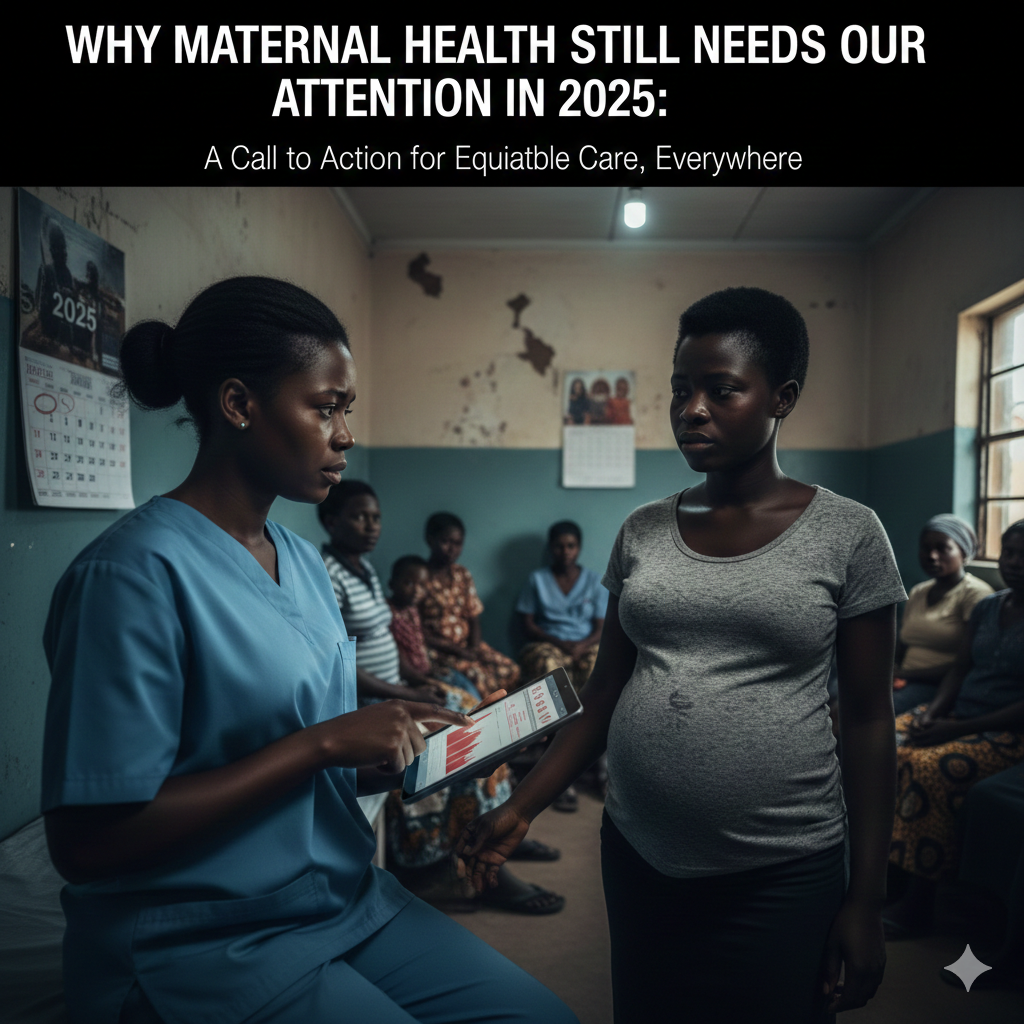
Even though women around the globe are constantly giving birth to new life, sadly, thousands of women die each year as a direct result of pregnancy. This should be a time of celebration, love and rebirth for women and their families, yet, for millions of women primarily those in low and middle-income countries, it is a moment of fear, uncertainty and preventable loss. During my clinical posting at prenatal ward, I met an elderly woman who came to visit a relative, while health educating her patient she told me “My daughter died some years back because the hospital was too far and we didn’t get to know she was in a preganancy complication” that moment kept ringing in my ears, it made me come to the realization that Maternal mortality isn’t a far statistics. As a young health leader in 2025, I have realize that maternal health is more than just a medical concern, it is a reflection of how the society views women, their value, their dignity, their equality and also their life.
Since the inception of the Millennium Development Goals (MDG), 1990–2015, advocates have worked tirelessly to advocate for the prevention of maternal mortality, and by 2025, we were expected to be at the end of preventable maternal deaths. Sadly, the momentum of the past few decades of advocacy has stalled, and we are now facing stagnated progress, increasing inequalities and growing pressure that threatens to roll back some of the gains that have been made over the past several decades.
Maternal mortality rates have declined globally since the 2000s, however the rate of decline has drastically slowed. Approximately 260,000 women died as a result of pregnancy-related causes in 2023, which is equivalent to nearly 700 deaths per day (World Health Organization, 2025). The global maternal mortality ratio sits at 197 deaths per 100,000 live births, which is still far below the Sustainable Development Goals (SDGs) target of fewer than 70 by 2030 (WHO, 2023). Maternal mortality disproportionately affects certain populations. For example, sub-Saharan Africa is home to approximately 70% of the global total of maternal deaths (WHO, 2025). The strained health systems in fragile states, combined with funding shortages and ongoing humanitarian crises, have created insurmountable barriers to the delivery of maternal care particularly in regions that need it the most (Okeke et al., 2024).
As we begin 2025, maternal health has never been more pressing, as the momentum of the previous decade of progress has stalled while women’s lives are still on the line (WHO, 2023). Maternal health remains a global health priority that has been influenced by geographic location, income status, conflict and gender inequality for decades. The notion that “childbirth is now ‘safe everywhere,’” is still not true (WHO, 2023). Maternal mortality has remained largely static since 2016 (UNICEF, 2025). Every two minutes, a woman dies as a result of a preventable cause (WHO, 2023).
Healthcare systems continue to be underfunded and understaffed. A significant portion of the global shortage of skilled birth attendants including midwives is responsible for the continued preventable deaths of millions of women, because receiving care from skilled health professionals prior to, during, and after childbirth can protect the lives of both women and newborns (WHO, 2018). Increased inflation and disrupted supply chains have dramatically reduced access to vital medications. Millions of women have lost access to essential antenatal care services as a result of conflict and displacement. Climate-related heat exposure and natural disasters are adding to the risk factors. Moreover, the social and educational disparities that exist among women compound the negative effects of these factors educated women are more aware of warning signs and more likely to seek care from a skilled provider (Oni et al., 2025). Women’s financial constraints and delayed decision-making to seek care, increase the risks associated with these factors. In 2025, maternal health is a reflection of the inequities present in a society and the gender and class disparities that exist.
One aspect of the maternal journey prenatal, intrapartum and postpartum is constant throughout all of them: inequity. A woman’s ability to survive is dependent upon multiple variables outside of the clinical realm including education, income, geographic location and her level of autonomy over her health decisions. Therefore, maternal health indicators reflect the values held by a society: when women are denied agency, support and respect, the number of maternal deaths increases (Dzomeku et al., 2022).
The negative impacts of poor maternal health on the health of the individual mother go much further than just the health of the individual mother herself. The loss of the mother by the time the child is born increases the likelihood of early death in the child, reduces the child’s ability to be immunized properly, and the child will likely suffer from malnutrition and delayed developmental milestones (WHO, 2024). When a mother experiences serious complications as a result of pregnancy such as severe anemia, fistula, or other long-term disabilities, she is unable to provide adequate care for her child and therefore impairs her child’s development, education and future well-being. The health issues and death of a mother can financially destabilize a family, leading to lost income, medical expenses, removal of children from school or the sale of assets and create intergenerational cycles of poverty (Hardy et al., 2019). The financial and social implications of maternal illness can compromise a family’s stability, social connections and community resilience.
Communities also feel the effects of maternal health issues. Women are pivotal in sustaining the social structure of their community providing family care, practicing health habits, supporting early childhood development and providing the foundation for community social networks. When maternal health issues become widespread throughout a community the social networks that support these functions are compromised, social productivity is decreased, social structures are strained and the health system is overwhelmed with preventable emergency cases. Thus, maternal mortality is a measure of a society’s overall capacity for resilience and reflects the degree to which a society invests in and equitably distributes resources to meet the health needs of its members (McHugh et al., 2021).
Poor maternal health constrains a nation’s potential for growth at the national level. Research shows that maternal mortality or morbidity is directly linked to lower human capital, less labor force participation, lower economic production, and slower GDP growth (Emefiene et al., 2025). Healthy women = economic growth; neglecting maternal health = stagnant economies. Therefore, maternal health is not solely a clinical issue, it is a developmental, economic and human rights issue.
The slow pace of progress towards reducing maternal mortality signifies a global health crisis. Sub-Saharan Africa is experiencing a maternal mortality rate and death burden that is exponentially greater than what exists in high-income countries (the region accounts for ~70% of global maternal deaths in 2023) (WHO, 2025). The majority of countries are behind where they should be regarding the achievement of the 2030 SDG goal. Most countries’ health systems face the same challenges, a lack of skilled personnel, an insufficient supply of essential drugs and supplies, limited emergency obstetric services and unreliable referral systems. Social determinants of health, poverty, gender inequality, limited education, cultural norms that restrict women’s options, early marriage continue to influence maternal health problems. One of the most effective ways to ensure that girls receive safe motherhood, girls’ education is still limited in many parts of the world and as a result, increases the likelihood of early pregnancy, unsafe childbirth and poor maternal health outcomes (WHO, 2025).
Climate change will exacerbate the pre-existing challenges in providing safe maternal health care delivery in the next several years. Climate-related natural disasters, heat stress, resource shortages and increased displacement or migration due to climate change (WHO, 2023). in conjunction with continued destruction of healthcare infrastructure, continued disruptions of healthcare services from conflict and continued digital divide limiting women’s access to telemedicine, online health education and remote support for maternal health will further exacerbate vulnerabilities (Ugwu et al., 2025).
If a renewed commitment does not occur to equitably invest in maternal health, maternal mortality could increase and potentially reverse decades of progress.
The imperative to take action emphasizes the fundamental principle that maternal health represents a form of justice, a representation of whether or not a society values the lives, autonomy and dignity of women. When mothers thrive, their families are more robust, their children are more likely to be healthy and economically or socially successful and their country is more productive.
Young health professionals, a new generation of health leaders who are informed, connected and committed to eliminating preventable maternal deaths are beginning to witness the gap in care firsthand through clinical rotations, community outreach and public health engagement. These young professionals are observing the resilience of women as they navigate pregnancy regardless of multiple barriers. Therefore, these young leaders are uniquely positioned to facilitate transformation.
We are important because we represent the intersection of the lived experience and innovative solutions to maternal health issues. Many young health workers have personally experienced the impact of maternal mortality in their own communities. We understand the gravity of this issue and we are employing new tools: digital advocacy, global collaboration, data-driven approaches and interdisciplinary work to address maternal health issues. We are taking maternal health discussions out of hospitals and into social media policy circles, classrooms and community forums. Young leaders are advocating for respectful maternity care, male involvement in maternal health, mental health support for mothers, postpartum support, online education and evidence-based interventions.
More importantly, we are choosing not to be passive. We are using our voices to hold people accountable and we are working to redefine maternal health as a universal right instead of a privilege.
To address the current maternal health challenges, we must strengthen health systems, empower women, educate communities and develop policies that support reproductive health. Providing access to skilled care across the continuum of pregnancy, and postpartum is the key to ensuring that mothers can safely give birth. Increasing opportunities for midwifery training, establishing emergency obstetric care and developing reliable referral systems are proven methods to save women’s lives (Daniels & Abuosi, 2020). Establishing health infrastructure, expanding access to essential medicines, establishing reliable transportation and communication systems are also crucial components to achieve safe motherhood.
Education has the potential to revolutionize maternal health. Educating girls can delay marriage, improve decision-making and reduce the risk of maternal mortalities (Tolossa et al., 2024). Increasing the health literacy of women, men and communities can improve early antenatal care attendance, improve early recognition of danger signs and timely care-seeking. Community health workers and trained birth attendants can also provide critical maternal health services.
Transformative change is achieved through education. There is documented proof that educating girls contributes to delaying the onset of marriage, to making informed decisions and to lowering the risk of a mother dying during pregnancy, delivery or postpartum (Fitria et al., 2024). Developing health literacy among women, men and their community will contribute to improved early antenatal care attendance, improved recognition of danger signs in pregnancy, labor, and improved timeliness in seeking care. CHWs and trained birth attendants can be valuable partners in improving maternal health outcomes when supported and integrated into the healthcare system.
To reform policies that promote maternal health, maternal health must become a high-priority area of focus in terms of funding, national strategy, accountability framework, and protocols for respectful care. New pathways for implementing digital health innovations, I still remember how I used a simple Mobile App to track danger signs which was a life- saving decision, such moments reminds me of how we cannot ignore the power of technological innovations such as teleconsultation, mobile education and emergency alert systems emerging but will require investments in both inclusion and accessibility.
Maternal health should be viewed as a shared responsibility. During an outreach, I had a conversation with a middle-aged Hausa man about why he rarely followed his wife to the Clinic, he replied ‘Wallahi, I just didn’t know my presence mattered’ it reminds me of how many men simply lacked guidance not intention.Therefore, by working with men, traditional leaders, young people, local organizations to help eliminate and change harmful cultural norms and practices, a better future can be realized. Additionally, international partnerships can facilitate best-practice sharing and capacity building.
While solutions do exist, the world needs to demonstrate sustained commitment, equitable investment and societal will.
Maternal health is a clear indicator of human progress. By 2025, maternal health has reached a tipping point. While many tools and a considerable amount of evidence exists to prevent the vast majority of maternal deaths, the rate of progress has stalled. Maternal health cannot be an afterthought; it is essential to human development and a moral obligation. It is the world’s ability to respond to this issue with urgency and compassion that will determine its future.
Awareness, advocacy and courage are the foundation of change. Change begins in clinics, communities, classrooms and online spaces where knowledge is being disseminated and new narratives are beginning to emerge. Young people have a large responsibility to ensure that maternal health remains a long term social movement based on respect for human dignity. The women who die due to complications from pregnancy or Childbirth are not just statistics, they represent the lost potential of generations yet to come.
The world cannot continue to allow preventable maternal deaths. If we act now, if we strengthen our systems, educate girls, empower women, involve men and hold others accountable, we can create a future where every woman has safe childbirth options and bringing a child into the world does not come at the expense of losing a woman’s life.
References
Ahmed, M. M., Okesanya, O. J., Olaleke, N. O., Adigun, O. A., Adebayo, U. O., Oso, T. A., Eshun, G., & Lucero-Prisno, D. E. (2025). Integrating Digital Health Innovations to Achieve Universal Health Coverage: Promoting Health Outcomes and Quality Through Global Public Health Equity. Healthcare, 13(9), 1060. https://doi.org/10.3390/healthcare13091060
Daniels, A. A., & Abuosi, A. (2020). Improving emergency obstetric referral systems in low and middle income countries: a qualitative study in a tertiary health facility in Ghana. BMC Health Services Research, 20(1). https://doi.org/10.1186/s12913-020-4886-3
Dzomeku, V. M., Mensah, A. B. B., Nakua, E. K., Agbadi, P., Okyere, J., Donkor, P., & Lori, J. R. (2022). Promoting respectful maternity care: challenges and prospects from the perspectives of midwives at a tertiary health facility in Ghana. BMC Pregnancy and Childbirth, 22(1). https://doi.org/10.1186/s12884-022-04786-w
Emefiene, C. B., Williams, H. T., & Mojekwu, J. N. (2025). Impact of Maternal Mortality on Economic Growth in Nigeria. AFRICAN JOURNAL of APPLIED RESEARCH, 11(2), 605–624. https://doi.org/10.26437/ajar.v11i2.1074
Fitria, M., Agung Dwi Laksono, Isyatun Mardhiyah Syahri, Ratna Dwi Wulandari, Ratu Matahari, & Yuly Astuti. (2024). Education role in early marriage prevention: evidence from Indonesia’s rural areas. BMC Public Health, 24(1). https://doi.org/10.1186/s12889-024-20775-4
Hardy, B., Hill, H. D., & Romich, J. (2019). Strengthening Social Programs to Promote Economic Stability During Childhood. Social Policy Report, 32(2), 1–36. https://doi.org/10.1002/sop2.4
McHugh, K., Martinez, R. M., & Alper, J. (2021). Proceedings of a Workshop. In www.ncbi.nlm.nih.gov. National Academies Press (US). https://www.ncbi.nlm.nih.gov/books/NBK575266/
Okeke, S. R., Okeke-Obayemi, D. O., Njoroge, M. R., & Yaya, S. (2024). Collateral damage: the overlooked reproductive health crisis in conflict zones. Reproductive Health, 21(1). https://doi.org/10.1186/s12978-024-01941-8
Oni, O. O., Bello, O. O., & Ajayi, A.-O. A. (2025). Determinants of adequate knowledge of postpartum warning signs and complications among parturients in Ibadan, Nigeria: a cross sectional study. BMC Pregnancy and Childbirth, 25(1). https://doi.org/10.1186/s12884-025-08058-1
Tolossa, T., Gold, L., Dheresa, M., Turi, E., Yeshitila, Y. G., & Abimanyi-Ochom, J. (2024). Adolescent maternal health services utilization and associated barriers in Sub-Saharan Africa: A comprehensive systematic review and meta-analysis before and during the sustainable development goals. Heliyon, 10(15), e35629. https://doi.org/10.1016/j.heliyon.2024.e35629
Ugwu, C. N., Ugwu, O. P.-C., Alum, E. U., Eze, V. H. U., Basajja, M., Ugwu, J. N., Ogenyi, F. C., Ejemot-Nwadiaro, R. I., Okon, M. B., Egba, S. I., & Uti, D. E. (2025). Sustainable development goals (SDGs) and resilient healthcare systems: Addressing medicine and public health challenges in conflict zones. Medicine, 104(7), e41535. https://doi.org/10.1097/md.0000000000041535
UNICEF. (2025, April). Maternal Mortality. UNICEF Data; UNICEF. https://data.unicef.org/topic/maternal-health/maternal-mortality/
WHO. (2018). Maternal Health. WHO | Regional Office for Africa. https://www.afro.who.int/health-topics/maternal-health
WHO. (2023). SDG Target 3.1 Maternal mortality. Www.who.int. https://www.who.int/data/gho/data/themes/topics/sdg-target-3-1-maternal-mortality
WHO. (2023, February 23). A woman dies every two minutes due to pregnancy or childbirth: UN agencies. Www.who.int. https://www.who.int/news/item/23-02-2023-a-woman-dies-every-two-minutes-due-to-pregnancy-or-childbirth–un-agencies
WHO. (2024, March 14). Newborn mortality. Www.who.int. https://www.who.int/news-room/fact-sheets/detail/newborn-mortality
WHO. (2025). Maternal Health. World Health Organization; World Health Organization. https://www.who.int/health-topics/maternal-health#tab=tab_1
World Health Organization. (2023, October 12). Climate Change. World Health Organization. https://www.who.int/news-room/fact-sheets/detail/climate-change-and-health
World Health Organization. (2023). Maternal health. Www.who.int. https://www.who.int/health-topics/maternal-health
World Health Organization. (2025). Maternal mortality. World Health Organization. https://www.who.int/news-room/fact-sheets/detail/maternal-mortality